Sea Trials - USCG License Exam
- 4.5
- Rating
- 10.00K
- Installs
- Free
- Price

 Analysis by App-foxy
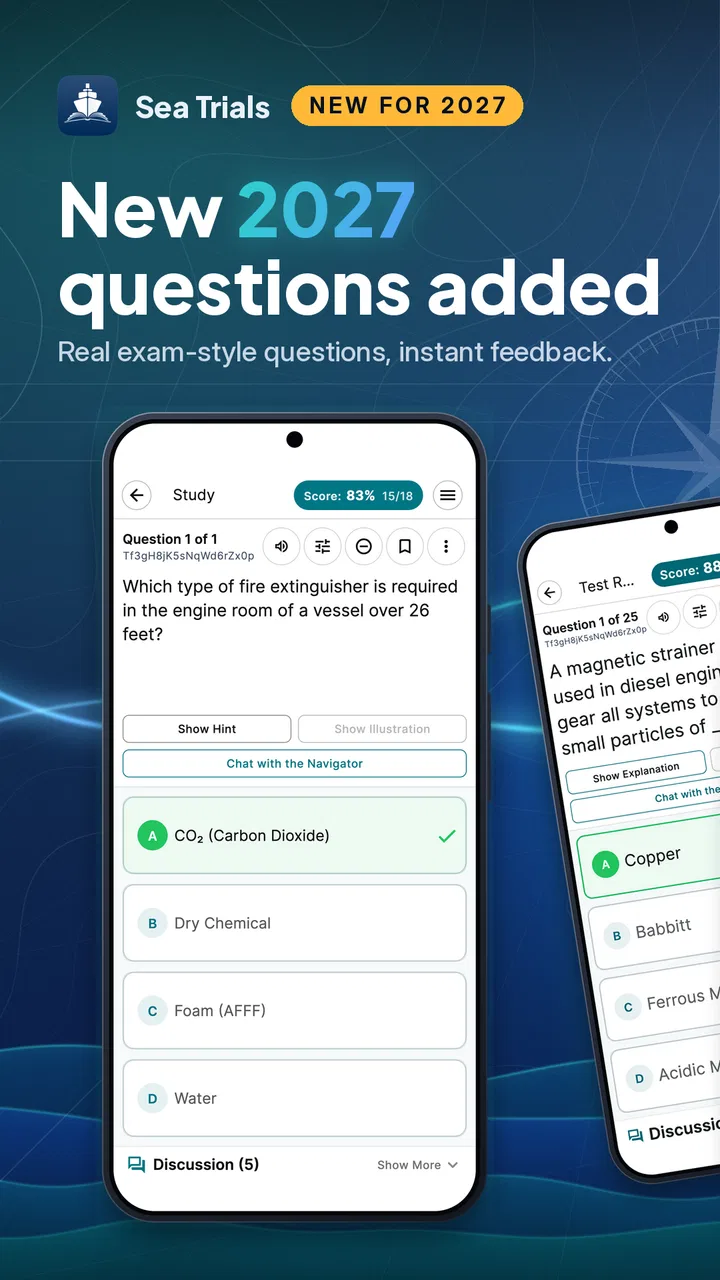
Preparing for a United States Coast Guard license exam is a very different task from casually browsing an education app. You need focused practice, a way to notice weak areas, and enough repetition to make technical questions feel familiar under pressure. Sea Trials - USCG License Exam is built around that specific goal, and after spending time with it, I see its strongest value in turning spare moments into structured exam preparation rather than trying to replace every other study resource.
The app comes from Lokey Labs, LLC and is free to install, which makes it an easy starting point for anyone exploring a maritime credential path. It belongs in the education category, carries an Everyone age rating, and has reached over ten thousand installs. Its average score is 4.5 from more than three hundred ratings, with over one hundred reviews, so there is a meaningful user response behind it without making the app look like a universal solution for every learner.
How Sea Trials Fits Into Real Exam Preparation
The most useful way to approach this app is as a practice companion. I would not treat a question-based study tool as a complete substitute for official references, instructor guidance, chart work, or hands-on maritime experience. Instead, I would use it to build recall and identify subjects that deserve slower, more careful study elsewhere.
You May Also Like

 Pandora - Music & Podcasts
Pandora’s Music Is Easy to Start, but Harder to Recover
Pandora’s strength is its low-effort path from a seed to a station. Its weak spot is how much confidence it asks you to place in connection, setup, and quiet recovery.

 8 Ball Pool
 Is Built on Rivalries, Rematches, and Routine
A close look at the rivalries, rematches, shared routines, and unanswered safety questions that turn a quick pool match into a persistent mobile community.

 Samsung Music
’s Quiet Strength Is Playing What You Already Own
Its reach comes less from spectacle than from dependable access to a personal library. That simplicity is both the app’s strongest retention engine and its ceiling.

 AccuWeather: Weather Radar
AccuWeather Review: A Quick, Clear Forecast for Everyday Decisions
For everyday plans, the best forecast is the one you can understand quickly. AccuWeather makes rain timing, radar, and local conditions easy to act on, with a few trade-offs.

 Hill Climb Racing
Why Hill Climb Racing Still Turns Crashes Into One More Run
A tiny car, a bumpy hill and one more upgrade: Hill Climb Racing keeps resurfacing because its simple chaos makes every near-miss feel personal.

 AliExpress - Shopping App
AliExpress Makes Global Shopping Feel Personal, but Shoppers Bear the Risk
AliExpress turns a global marketplace into a pocket-sized discovery engine. Its reach is useful, its shopping loop compelling, and its trade-offs easy to miss.
More From Our News Desk
View All News


That distinction matters because license preparation often mixes memorization with interpretation. A quick practice session can help you recognize terminology and test your readiness, but a correct answer does not automatically mean you understand why it is correct. I found the app more valuable when I paused after each question and explained the reasoning to myself, rather than racing through a set simply to finish it.
A practical routine is to use it in three different ways. During an initial pass, answer naturally and mark the topics that create hesitation. In the second pass, revisit those areas without looking at notes first. Before an exam session, use shorter bursts to check whether the information is still available from memory. This workflow gives the app a clear role and prevents it from becoming passive tapping.
One advantage over a general maritime website is the reduced friction. A browser search can lead you through explanations, forums, regulations, and unrelated material before you reach a useful practice question. Sea Trials is more direct: open the app, work through study material, and return to the subjects that need attention. That simplicity is especially helpful when your available time is limited.
What speed feels like in everyday use
For a study app, perceived speed is less about flashy transitions and more about how quickly I can move from opening it to meaningful practice. Sea Trials feels suited to short sessions because its purpose is narrow. I can use a few quiet minutes before work, while waiting for an appointment, or after reviewing a chapter without having to set up a full desktop study environment.
That convenience has a trade-off. A fast question session can create the impression of progress even when the underlying understanding is shallow. I recommend slowing down whenever an answer is based on a guess. The app is most efficient when it helps you expose uncertainty, not when it encourages you to collect a high completion count.
It is also worth separating app speed from learning speed. No practice tool can make unfamiliar navigation rules, safety concepts, or technical language instantly understandable. If a question repeatedly catches you, the efficient response is to leave the app briefly, consult a trusted study source, and then return to test the concept again. That loop is more productive than repeatedly choosing answers until one happens to stick.
Where heavier study sessions reveal the limits
Light use is straightforward, but longer sessions demand more discipline from the learner. Repeated question practice can become mentally tiring, particularly when several items cover similar ideas. At that point, I would divide preparation into focused blocks instead of treating the app as something to run continuously for hours.
A useful heavy-use method is to create a simple paper or digital note beside the app with three headings: confident, uncertain, and review later. The goal is not to copy every question. It is to capture the concepts that caused hesitation and then stop when attention starts to fall. This makes the next session more targeted and reduces the temptation to mistake repetition for mastery.
Another worthwhile approach is alternating active recall with explanation. Answer a question, state why the selected answer works, and identify what detail would make another option correct. That extra step is particularly important for license preparation because small wording differences can change the meaning of a question. The app can provide the prompt, but the learner has to supply the deeper reasoning.
I would also avoid using it as background activity while doing something else. Maritime exam questions deserve concentration, and split attention can make a session look productive while leaving weak retention. If you only have a minute, answer one question carefully. That is better than opening a long session that you cannot genuinely focus on.
Reliability as a study companion
My view of reliability here is practical rather than dramatic. An education app earns trust when it supports a repeatable routine and does not make the learner fight the interface. Sea Trials has a clear purpose, a recognizable audience, and a current version listed as 8.9.2, which suggests an actively maintained product rather than an abandoned experiment.
Still, reliability in exam preparation involves more than whether an app opens. You also need confidence that your study method is leading somewhere useful. I would cross-check important interpretations with current official material or a qualified instructor, especially when an answer affects safety, regulations, or a licensing decision. The app should reinforce your preparation, not become your only authority.
The rating profile is encouraging without removing the need for judgment. A 4.5 average from hundreds of ratings indicates that many users find value in it, but individual study needs differ. Someone preparing for a particular credential or exam section should make sure the app matches that goal before building an entire plan around it.
Recovery is another part of reliability. If I lose concentration or leave a session unfinished, the best recovery is not to restart everything blindly. I return to the topic that caused the most uncertainty, review the underlying material, and then use a smaller practice block. This makes the app useful even when a study day goes badly, because it can help turn mistakes into a next step.
Device constraints and the role of the phone
Sea Trials supports Android devices running version 7.0 or later, so compatibility is broad for many phones and tablets still in regular use. That makes it practical for learners who do not want to buy a newer device just for exam preparation. The Everyone rating also makes it approachable for a wide range of users, although the subject itself is naturally aimed at people pursuing maritime knowledge or credentials.
A phone remains a small-screen study tool. It is convenient for questions, but less comfortable for reading lengthy explanations, comparing several references, or doing detailed chart-based work. I would use a larger screen or printed material when the subject requires extended concentration, then return to the app for recall practice. This division of labor feels more comfortable than forcing every part of preparation onto a handset.
Device resources also matter in ordinary ways. A phone with limited storage, an older battery, or a crowded background workload may make any study session less pleasant. I would close distracting apps, keep the device charged, and use a stable routine rather than expecting the phone to carry an entire study day. Those are simple habits, but they improve perceived responsiveness and reduce interruptions.
The app is free to download, which lowers the barrier to trying it. However, in-app purchases range from $29.99 to $299.99 per item. That is a substantial possible expense, so I would inspect what a purchase unlocks and whether it matches the exact exam preparation I need before paying. Free entry is useful for evaluation, but it should not be confused with an unlimited no-cost study plan.
Who will get the most from it
I think Sea Trials is a good fit for a learner who already has a study direction and wants frequent practice. It can work well for someone reviewing after a class, refreshing knowledge before a test, or using commute downtime for active recall. It is also useful for a person who tends to postpone studying because traditional books feel difficult to carry or open during short breaks.
The app is less suitable for someone starting from zero and expecting it to teach every subject in a fully guided sequence. If you need extensive explanations, diagrams, instructor feedback, or a personalized curriculum, a course or textbook should take the leading role. The app can then act as a checkpoint rather than the foundation.
I would also be cautious if you are preparing for a very specific license path and have not confirmed that the available material aligns with your exam. A broad maritime practice tool may be helpful, but exam preparation is too important to assume that every question applies equally to every candidate. Matching the resource to your target credential is part of using it responsibly.
A realistic study scenario
Imagine I have finished a workday and have twenty minutes before dinner. I open Sea Trials intending to complete a quick practice session. Instead of rushing through as many questions as possible, I answer a small group, pause on anything uncertain, and write down the subject that caused trouble. After dinner, I spend time with a more detailed reference on that topic. The following morning, I return to the app and test whether I can answer similar questions without relying on recognition alone.
That pattern shows where the app fits best: it creates a bridge between formal study and daily repetition. The first session exposes a gap, the separate reference supplies depth, and the next session checks retention. Used this way, the app contributes something a static book cannot provide as conveniently: a quick prompt that makes me retrieve information instead of merely rereading it.
There is a second scenario where I would use it differently. If an exam is approaching and I am already comfortable with the material, I might use short sessions to maintain recall while protecting time for rest and final review. I would not turn the last evening into an endless question marathon. Fatigue can make familiar material look unfamiliar and can undermine confidence without adding much knowledge.
How it compares with common alternatives
Compared with a textbook, Sea Trials is more portable and interactive, but usually less useful for building a complete mental framework from the beginning. A book lets me slow down, annotate, compare sections, and follow an extended explanation. The app is better when I want a prompt, a decision, and an immediate check of what I remember.
Compared with a classroom or instructor, it is more flexible and less personal. I can study on my own schedule, but I cannot expect the app to notice a misunderstanding in the way an experienced teacher might. An instructor can also connect abstract questions to real situations, while the app is strongest as an individual practice aid.
Compared with general online searches, it offers a more focused path and fewer distractions. The downside is that a search can provide broader context and multiple explanations when one source is unclear. My preferred combination is therefore not either-or: use reliable instruction and reference material for understanding, then use Sea Trials to make recall more regular and measurable in everyday life.
The purchase decision and long-term value
Because the initial download is free, I would begin by testing the workflow rather than committing immediately. Ask yourself whether the question format helps you identify weak areas, whether the available material matches your goal, and whether you can use it consistently without feeling that you are merely guessing. Those answers matter more than the appeal of a low-friction installation.
The possible purchase prices deserve careful attention. A higher-priced item may be worthwhile if it covers the exact preparation you need and replaces another resource you would otherwise buy, but it is poor value if you only need occasional refreshers. I would compare the purchase with the cost of a book, course, or instructor and consider how much structured practice I will realistically complete.
Long-term value also depends on how honestly I review my results. If I only repeat familiar questions, the app becomes a confidence tool rather than a learning tool. Rotating topics, recording uncertain concepts, and checking explanations outside the app make the investment more defensible. The strongest return comes from a deliberate workflow, not from simply owning access.
My performance verdict
Sea Trials - USCG License Exam is a focused education app with a sensible place in maritime exam preparation. I like its direct purpose, mobile convenience, and free starting point. It is especially effective for short recall sessions, identifying areas that need more work, and maintaining contact with study material when a full textbook session is unrealistic.
My reservations are equally clear. A question-practice app should not be treated as the sole source for a licensing exam, and the possible in-app purchase cost means users should evaluate the material before spending. Small-screen study is convenient but not ideal for every kind of maritime learning, and fast answers can hide weak understanding if the learner never stops to explain the reasoning.
My recommendation is to use it as a disciplined practice layer, not as a complete education program. If you are pursuing a USCG license and already have dependable reference material or instruction, it can make revision more regular and expose gaps that passive reading leaves hidden. If you need detailed teaching from the ground up, choose a fuller course or book first, then let this app reinforce what you have learned.
FAQs for Sea Trials - USCG License Exam
01What is Sea Trials – USCG License Exam?
Sea Trials – USCG License Exam is a study and practice app designed for people preparing for United States Coast Guard merchant mariner license examinations. It typically presents exam-style questions covering subjects such as navigation, deck safety, rules of the road, seamanship, and general knowledge. The app is intended as a revision aid and should complement, rather than replace, official Coast Guard materials and approved training.
02Which USCG license exams and topics does the app cover?
The available subjects depend on the version of the app and the selected license path, so users should review the current description before downloading. In general, Sea Trials focuses on common USCG examination areas, including navigation, chart work, deck operations, safety, regulations, and maritime rules. Coverage may differ by endorsement, tonnage, route, or credential, and not every question set applies to every applicant.
03Can Sea Trials replace an approved maritime school or official study materials?
No. Sea Trials is best used for practice, self-assessment, and identifying topics that need further study. Passing a simulated quiz does not guarantee success on an official examination, and the app cannot replace required sea service, medical documentation, applications, or approved courses. Applicants should verify requirements with the USCG and consult current regulations, reference books, charts, and qualified instructors.
04Does the app work offline, and is an internet connection required?
Many quiz and review functions may be available after the relevant content has been installed, which can be useful when studying aboard a vessel or in areas with limited connectivity. However, internet access may still be required for downloading the app, receiving updates, restoring purchases, or accessing certain online features. Because offline behavior can vary by device and release, test the app before relying on it at sea.
05Is Sea Trials – USCG License Exam free to download?
The app’s download price and available features can vary between Android and iOS, and some content may be limited until an in-app purchase or subscription is completed. Before installing, check the store listing for current pricing, included question banks, trial restrictions, renewal terms, and supported devices. Also review the privacy policy and cancellation details so you understand any recurring charges before starting a purchase.
Pros
- Covers key USCG license subjects in a focused exam-prep format.
- Practice questions help identify weak areas before taking the official exam.
- Useful for studying in short sessions while traveling or between work shifts.
- Clear maritime terminology supports learners preparing for professional credentials.
- A practical supplement to classroom instruction and Coast Guard study materials.
Cons
- Question coverage may not match every specific USCG license or local exam version.
- Passing practice quizzes does not guarantee success on the official examination.
- Some users may find repeated practice sessions become monotonous over time.
- Requires independent study of regulations and topics not fully explained in-app.
- Content accuracy and relevance depend on how regularly the app is updated.

Sea Trials - USCG License Exam
Gallery